
Youth leadership, scientific evidence, and international collaboration marked an important milestone for the Neuro Climate Working Group at COP31.
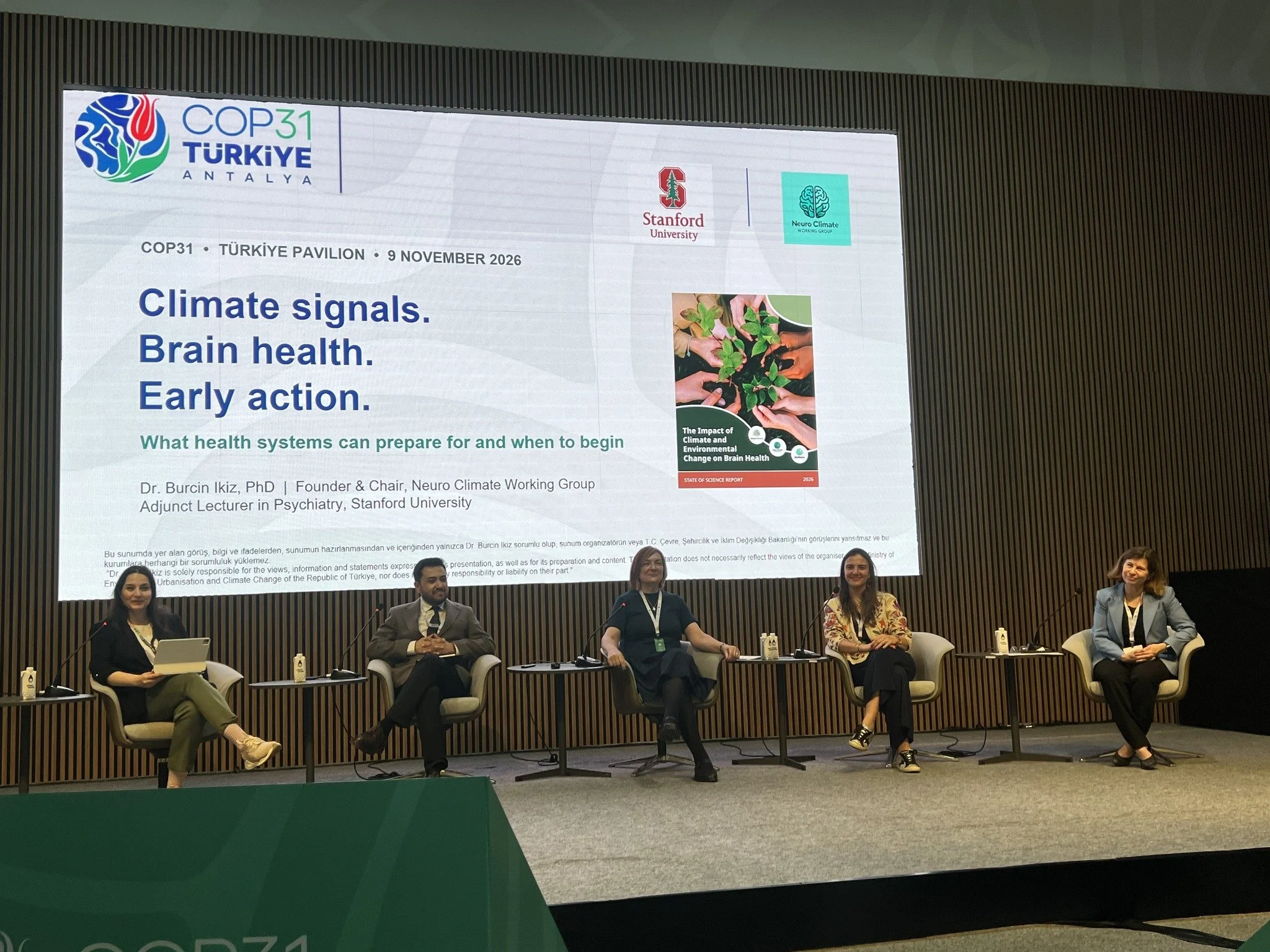
The first week of COP31 in Antalya, Türkiye, marked an exciting chapter for the International Neuro Climate Working Group (NCWG) and our growing global community.
For years, the neurological and mental health consequences of climate change have remained largely overlooked in international climate discussions. While the impacts of extreme heat, air pollution, and climate-related disasters on physical health are increasingly recognized, their effects on brain development, cognition, neurological conditions, and mental well-being have received far less attention.
At COP31, we were proud to help bring brain health to the forefront of climate and health conversations.
Together with colleagues and partners across Türkiye, Australia, and the international climate and mental health community, NCWG contributed to five events and discussions spanning official UNFCCC programming, the Türkiye Pavilion, and health-focused sessions.
These conversations represented an important step toward making brain health a more visible and integral part of the global climate agenda.
From scientific evidence to climate action
Our participation built on the momentum of the 2026 Neuro Climate Science and Policy Report, launched during New York Climate Week in September.
Developed through the collective expertise of our international network, the report brings together evidence on how climate and environmental change affect brain health throughout life, identifies important research gaps, and outlines opportunities for policy and action.
At COP31, we had the opportunity to bring this evidence directly into conversations with scientists, health professionals, policymakers, youth advocates, and international organizations.
One of the week's highlights was our participation in the official UNFCCC side event, Child and Youth Minds, Brains, and Resilience in a Changing Climate: Evidence to Action, on November 11.
The session brought together international experts and advocates to discuss the implications of climate change for children's and young people's neurological and mental health, and how scientific evidence can guide more effective protection and resilience.
Other discussions explored climate and mental health, the impacts of environmental exposures on cognitive performance and well-being, and opportunities to strengthen climate-resilient health systems.
Across these events, we emphasized a central message: protecting brain health is an essential part of climate action.
Climate change can affect how we learn, think, feel, and function. Its neurological and psychological consequences may persist long after an extreme weather event and, in some circumstances, extend across generations. Understanding these impacts can strengthen the case for climate mitigation, adaptation, and more equitable health policies.
A milestone for youth leadership: Launching the COP31 Youth Statement
Perhaps our proudest moment was the launch of the COP31 Youth Statement on Brain Health and Climate Change, developed by the NCWG Youth Council.
Presented during our November 11 UNFCCC side event, the statement reflects the perspectives of young people alongside scientific evidence on the growing threats climate change poses to neurological and mental health.
It calls on governments, policymakers, and international institutions to:
Integrate neurological and mental health indicators into national climate adaptation plans and climate commitments.
Recognize and fund neurological and psychosocial health responses through climate finance mechanisms.
Invest in climate–brain health research, particularly in low- and middle-income countries.
Strengthen accountability through monitoring and reporting of health outcomes.
Ensure meaningful youth leadership and decision-making power in climate and health policy.
The statement carries a message that deserves to be heard far beyond COP31:
“Our minds, our futures, and our solidarity are not negotiable.”
We are deeply grateful to our lead youth contributors Boryana Todorova, Muskan Lamba, Saiarchana Darira, and Nikhil Nunna; to YOUNGO Environmental Health Group leaders Aishat Oduye, MD, and Sıla Gürbüz; and to our wonderful NCWG coordinator Angie Michaiel, PhD, for her leadership and support throughout this effort.
It was especially meaningful to have youth representatives present in Antalya to amplify these messages.
Young people are already experiencing the consequences of climate change, and their generation will live longest with the decisions being made today. Their perspectives must be reflected not only in statements and events, but also in the rooms where climate policies are negotiated, funded, and implemented.
Read and share our COP31 Youth Statement launch announcement.
Growing momentum for health in climate policy
COP31 also offered encouraging signs that health is gaining greater recognition within the international climate community.
Health-focused events, discussions on adaptation financing, and new initiatives to strengthen climate-resilient health systems reflected growing recognition that climate action is fundamentally about protecting people's lives and well-being.
At the same time, important gaps remain. Health advocates continue to call for stronger recognition of health in negotiated climate outcomes, more accessible adaptation finance, and greater investment in evidence-based solutions.
For NCWG, this reinforces the importance of ensuring that neurological and mental health are included as the climate and health agenda evolves.
We were encouraged by conversations with colleagues from the World Health Organization, Wellcome, Clean Air Fund, and numerous research institutions and civil society organizations. These exchanges opened promising avenues for continued collaboration, research, and policy engagement.
They also highlighted the value of bringing different disciplines together. Neuroscientists, neurologists, psychiatrists, psychologists, climate scientists, public health professionals, and community advocates all have important contributions to make in understanding and addressing climate-related brain health risks.
Strengthening regional leadership in Türkiye and beyond
Hosting COP31 in Türkiye made this year's gathering particularly meaningful for NCWG founder and chair Dr. Burcin Ikiz and our growing community of researchers and clinicians in the region.
One of the most exciting developments emerging from these conversations is the planned launch of the Neuro Climate Türkiye Working Group.
This regional initiative will bring together researchers, clinicians, and other experts in Türkiye to strengthen locally relevant evidence, expand scientific collaboration, and help translate knowledge into action.
It will build on NCWG's commitment to supporting locally led initiatives while connecting expertise and experiences across regions.
As our global network continues to grow, we recognize that solutions to climate-related brain health challenges must reflect the different environments, vulnerabilities, resources, and strengths of communities around the world.
What comes next?
Our experience at COP31 reinforced an important lesson: meaningful change requires both scientific evidence and persistent collaboration.
Bringing brain health into international climate discussions is an important milestone, but it is only the beginning.
In the months and years ahead, NCWG will continue working to:
Translate emerging brain health evidence into climate adaptation and mitigation policies.
Advance international and locally led climate–brain health research.
Support meaningful youth participation and leadership.
Strengthen regional collaborations, including the new Türkiye working group.
Build partnerships that connect research with practical solutions to protect brain health and strengthen resilience.
We return from the first week of COP31 energized by the conversations, partnerships, and shared commitment we witnessed.
We are especially grateful to the many colleagues, organizations, youth leaders, and advocates who helped make this work possible. Progress is built through communities of people who continue to show up, share knowledge, challenge assumptions, and work together even when change feels slow.
As COP31 negotiations continue, our message remains clear:
Protecting the climate means protecting our brains, our health, and our shared future.
And ensuring that young people have a meaningful voice in shaping that future is essential.
We look forward to building on this momentum, together.
Healthy brains. Healthy people. Healthy planet. Together.
Explore the NCWG Science and Policy Report | Learn more about the Neuro Climate Working Group