Frequently Asked Questions
-
Extreme and chronic heat place direct stress on the brain by disrupting temperature regulation, sleep, and cardiovascular function. High temperatures are linked to increased risks of headaches, cognitive impairment, stroke, worsening of neurological conditions, and mental health crises. Heat can also affect brain signaling and the blood–brain barrier, reducing the brain’s ability to protect itself from harmful substances. Over time, repeated heat exposure may accelerate cognitive decline and increase vulnerability to dementia.
-
Air pollution, especially fine particulate matter (PM₂.₅), can enter the bloodstream and reach the brain, triggering inflammation and oxidative stress. Long-term exposure is associated with higher risks of stroke, dementia, depression, anxiety, and neurodevelopmental disorders. Emerging evidence shows that air pollution can damage brain structure and interfere with cognitive function across the lifespan. Importantly, there is no known safe level of air pollution for brain health.
-
Beyond heat and air pollution, climate change affects brain health through extreme weather events, wildfires, food and water insecurity, toxic exposures, and the spread of vector-borne diseases. These stressors can increase trauma, anxiety, depression, and long-term neurological risk. Climate-related disruptions also affect social stability, education, and healthcare access, which are critical determinants of brain health. Together, these pathways create cumulative and unequal brain health burdens worldwide.
-
Children, older adults, pregnant individuals, people with neurological or mental health conditions, outdoor workers, and marginalized communities face the greatest risks. Brains are especially vulnerable during early development and aging, making climate exposures more harmful at these life stages. Communities already facing poverty, pollution, or limited healthcare are often exposed to higher climate risks with fewer resources to adapt. Climate change is therefore both a brain health issue and an equity issue.
-
Individuals can reduce risk by minimizing exposure to heat and air pollution, prioritizing hydration, sleep, and cardiovascular health, and staying informed about local climate and air quality alerts. Using cooling strategies, air filtration, and protective behaviors during extreme events can make a meaningful difference. Supporting brain-healthy lifestyles, such as physical activity, social connection, and stress management, also builds resilience. Advocacy for cleaner air and climate action is another powerful form of brain protection.
-
Communities can invest in heat-resilient infrastructure, clean energy, green spaces, and air quality improvements. Strengthening public health systems, early warning systems, and mental health services is critical as climate risks grow. Community-based planning that centers vulnerable populations helps reduce inequities in exposure and impact. Brain-healthy communities are those that combine climate resilience with social connection and equity.
-
The International Neuro Climate Working Group is a global network of scientists, clinicians, public health experts, and policymakers working to advance research, policy, and action at the intersection of climate change and brain health. NCWG synthesizes scientific evidence, supports collaborative research, develops policy-relevant insights, and raises awareness worldwide. We host regular meetings, working groups, and public resources to connect knowledge with action. You can get involved by joining the network, participating in working groups, attending events, or collaborating on research, policy, or advocacy efforts.
Reports
Stay tuned! Our State-of-Science report synthesizing how climate change impacts brain health coming out soon.
Building Brains Coalition State of Field Report 2026
State of Global Air Report 2025
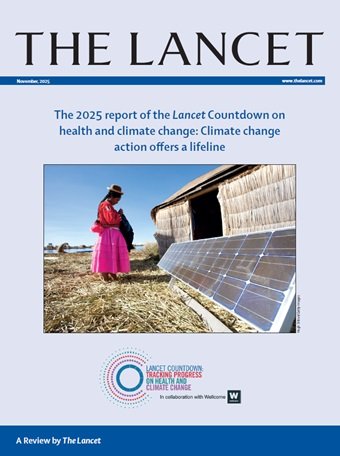
Lancet Countdown Climate and Health Report 2025

Mental Health and Our Changing Climate Children and Youth Report 2023
Books
Check out these incredible books written by our members and stay tuned for our upcoming book on Ecological and Green Neuroscience by MIT Press.
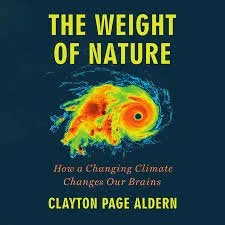
The Weight of Nature
Clayton Page Aldern
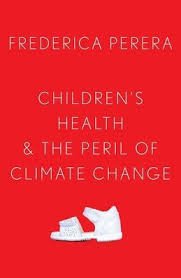
Children’s Health and the Peril of Climate Change
Frederica Perera
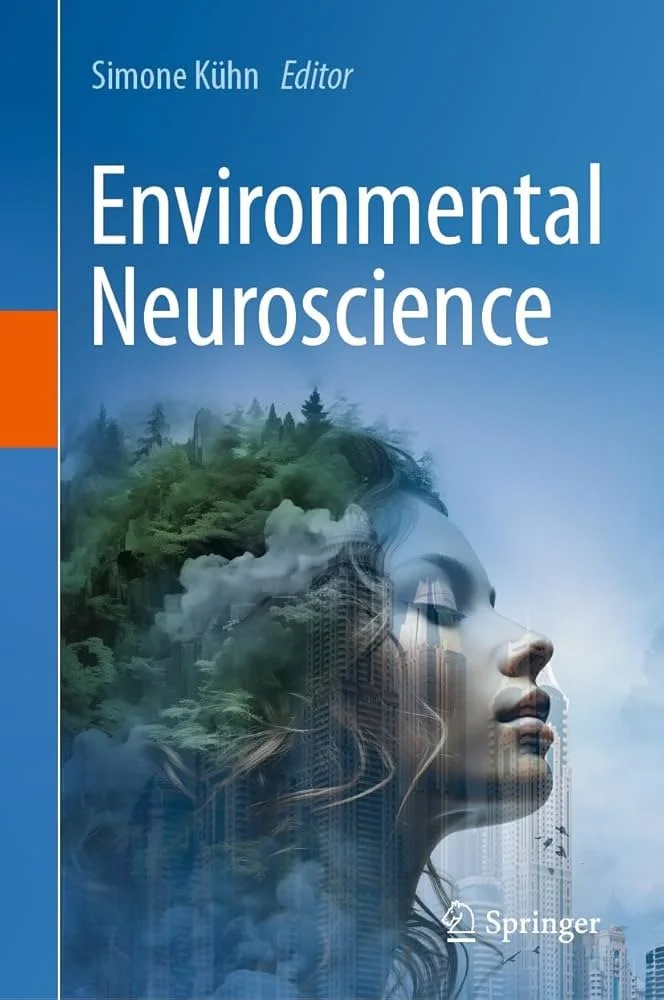
Environmental Neuroscience
Simone Kuhn

Nature and the Mind
Marc Berman
Key Scientific Studies
This is a curated, non-exhaustive selection of peer-reviewed studies that have significantly shaped the understanding of the links between climate change, environmental exposures, and mental and brain health, and will be updated over time.
Abolhasani E, Hachinski V, Ghazaleh N, Azarpazhooh MR, Mokhber N, Martin J. Air Pollution and Incidence of Dementia: A Systematic Review and Meta-analysis. Neurology. 2023 Jan 10;100(2):e242–54. https://doi.org/10.1212/wnl.0000000000201419
Adalat, S., Giannakou, K., Valderrama, B., Cárdenas-Aguilera, J. G., Sakkas, G. K., Overeem, J., Hafez, G., Kelly, D., Vulevic, J., He, G., Mihăilă, S. M., Tammaro, A., Ikiz, B., Cryan, J. F., & Climate-Kidneys-Cognition Working Group (2026). Global environmental change and the gut-kidney-brain axis: a review and framework of vulnerability and resilience. The Lancet. Planetary health, 101453. Advance online publication. https://doi.org/10.1016/j.lanplh.2026.101453
Adalat S, Hajat S, Ikiz B. Climate change has serious implications for children’s brain health. BMJ. 2024 Jul 22;386:q1588. https://doi.org/10.1136/bmj.q1588
Beaglehole B, Mulder RT, Frampton CM, Boden JM, Newton-Howes G, Bell CJ. Psychological distress and psychiatric disorder after natural disasters: systematic review and meta-analysis. Br J Psychiatry. 2018;213(6):716–22. https://doi.org/10.1016/S2468-2667(25)00068-4
Buoli M, Grassi S, Caldiroli A, Carnevali GS, Mucci F, Iodice S, et al. Is there a link between air pollution and mental disorders? Environ Int. 2018 Sep 1;118:154–68. https://doi.org/10.1016/j.envint.2018.05.044
Burrows K, Denckla CA, Hahn J, Schiff JE, Okuzono SS, Randriamady H, et al. A systematic review of the effects of chronic, slow-onset climate change on mental health. Nat Ment Health. 2024 Feb;2(2):228–43. https://doi.org/10.1038/s44220-023-00170-5
Crandon TJ, Dey C, Scott JG, Thomas HJ, Ali S, Charlson FJ. The clinical implications of climate change for mental health. Nat Hum Behav. 2022 Nov;6(11):1474–81. https://doi.org/10.1038/s41562-022-01477-6
Gulcebi MI, Leddy S, Behl K, Dijk DJ, Marder E, Maslin M, et al. Imperatives and co-benefits of research into climate change and neurological disease. Nat Rev Neurol. 2025 Apr;21(4):216–28. https://doi.org/10.1038/s41582-024-01055-6
Ikiz B, Carlson JM. Neural pathways to resilience: Leveraging neuroscience to understand and mitigate eco-anxiety. Ann N Y Acad Sci. 2025;1547(1):18–23. https://doi.org/10.1111/nyas.15347
Lawrance EL, Thompson R, Newberry Le Vay J, Page L, Jennings N. The Impact of Climate Change on Mental Health and Emotional Well-being: A Narrative Review of Current Evidence, and its Implications. Int Rev Psychiatry. 2022 Jul 4;34(5):443–98. https://doi.org/10.1080/09540261.2022.2128725
Legaz, A., Moguilner, S., Barttfeld, P., Cuadros Castro, J., Galván Rial, D. S., Migeot, J., Farina, F. R., Gonzalez-Gomez, R., Salazar-Londoño, S., de Souza Azzi, T., Alcauter, S., Amoruso, L., Anghinah, R., Bakr, M., Behrens, M. I., Bruno, M. A., Cardona, J. F., Chen, C., Colliot, O., Custodio, N., … Ibanez, A. (2026). The exposome of brain aging across 34 countries. Nature medicine, 32(5), 1838–1851. https://doi.org/10.1038/s41591-026-04302-z
Li A, Leppold C. Long-term mental health trajectories across multiple exposures to climate disasters in Australia: a population-based cohort study. Lancet Public Health. 2025 May;10(5):e391–400. https://doi.org/10.1016/s2468-2667(25)00068-4
Liu J, Varghese BM, Hansen A, Xiang J, Zhang Y, Dear K, et al. Is there an association between hot weather and poor mental health outcomes? A systematic review and meta-analysis. Environ Int. 2021 Aug 1;153:106533. https://doi.org/10.1016/j.envint.2021.106533
Louis S, Carlson AK, Suresh A, Rim J, Mays M, Ontaneda D, et al. Impacts of Climate Change and Air Pollution on Neurologic Health, Disease, and Practice: A Scoping Review. Neurology. 2023 Mar 7;100(10):474–83. https://doi.org/10.1212/wnl.0000000000201630
Noor, J., Flanagan, E., Lacap, L. M., Farooq, M., Bezgrebelna, M., Fung, K., Andari, S., Anthonj, C., Boateng, G. O., Gislason, M., Green, S., Fournier, B., Henderson, J., Ikiz, B., Kenny, G. P., Meade, R. D., Metz, C., Sachal, A., Wolbring, G., & Kidd, S. A. (2026). The implications of climate change for the learning and development of children and youth living in poverty. The Lancet Public Health, 11(6), e408–e416.https://doi.org/10.1016/S2468-2667(26)00075-7
Park RJ, Behrer AP, Goodman J. Learning is inhibited by heat exposure, both internationally and within the United States. Nat Hum Behav. 2021 Jan;5(1):19–27. https://doi.org/10.1038/s41562-020-00959-9
Ruszkiewicz JA, Tinkov AA, Skalny AV, Siokas V, Dardiotis E, Tsatsakis A, et al. Brain diseases in changing climate. Environ Res. 2019 Oct;177:108637. https://doi.org/10.1016/j.envres.2019.108637
Sahni, P. S., Dewan, S., Sachdeva, M., Ranathunga, N., Fadhullah, W., Abdullah, J. M., Roy, T., Pal, B., Baloch, S., Adhikari, B., Ikiz, B., & Mishra, J. (2025). Climate Cognition Crisis: Urgent Call to Address Air Pollution and Extreme Heat Impacts in Learning Environments of Children in South and Southeast Asia. The Malaysian journal of medical sciences : MJMS, 32(5), 1–20. https://doi.org/10.21315/mjms-08-2025-s02
Sakhvidi MJZ, Yang J, Lequy E, Chen J, Hoogh K de, Letellier N, et al. Outdoor air pollution exposure and cognitive performance: findings from the enrolment phase of the CONSTANCES cohort. Lancet Planet Health. 2022 Mar 1;6(3):e219–29. https://doi.org/10.1016/s2542-5196(22)00001-8
Sisodiya SM, Gulcebi MI, Fortunato F, Mills JD, Haynes E, Bramon E, et al. Climate change and disorders of the nervous system. Lancet Neurol. 2024 Jun;23(6):636–48. https://doi.org/10.1016/s1474-4422(24)00087-5
Thompson R, Lawrance EL, Roberts LF, Grailey K, Ashrafian H, Maheswaran H, et al. Ambient temperature and mental health: a systematic review and meta-analysis. Lancet Planet Health. 2023 Jul;7(7):e580–9. https://doi.org/10.1016/S2542-5196(23)00104-3
Zammit C, Torzhenskaya N, Ozarkar PD, Calleja Agius J. Neurological disorders vis-à-vis climate change. Early Hum Dev. 2021 Apr;155:105217. https://doi.org/10.1016/j.earlhumdev.2020.105217
Articles, Media Features & Webinars
Plastics in the brain: what science is revealing
Scientists are finding microplastics in human brain tissue.

How nature restores our brains
The science behind nature’s power to sharpen focus and support mental health.

The hidden neurological toll of wildfires
It can take months, years, even decades to understand the damage done, especially to children

Climate change’s hidden mental toll on children
New evidence reveals that the climate crisis affects neurological and mental well-being more than previously understood
Healthy Tomorrows: How the Built Environment Shapes Children's Brains (UNICEF)
In this insightful conversation, Dr. Burcin Ikiz explores the powerful connection between the environment and your child's brain health. Dr. Ikiz explains how everyday exposures, such as air, noise, and light pollution; mold and mycotoxins; and toxic chemicals, can shape neurological outcomes across the lifespan. She highlights the particularly profound impact these factors can have on children’s developing brains, influencing cognition, behavior, and long-term health.
National Academies Climate Conversations: Brain Health
Climate change is increasingly recognized not only as an environmental and physical health challenge, but also as a growing risk to how we think, feel, and function. From extreme heat and air pollution to climate-related disasters, environmental stressors can affect brain health across the lifespan, shaping neurological outcomes as well as mental well-being. These impacts are not felt equally, with some communities facing greater risks and having fewer resources to respond. Renee Salas (The Cooperative at Mass General Brigham) will moderate a conversation between Katie Hayes (George Mason University) and Burcin Ikiz (EcoNeuro) on how climate change is shaping brain and mental health outcomes and how research, policy, and strategies can better respond to these risks moving forward.
Hot Headed: When Extreme Heat becomes a Severe Mental Illness Risk
As global temperatures rise, so do the risks to our health, but some groups are disproportionately vulnerable. Individuals with severe mental illness (SMI) are three times more likely to die during a heatwave than others. 'Hot Headed' explores how heatwaves impact individuals with SMI with conditions including schizophrenia, bipolar disorder, and psychosis. Drawing on emerging research, this short film highlights how heatwaves can worsen psychotic symptoms and increase heat-related illness. From policymakers, clinicians, and researchers to architects and community members, we all play a role in protecting those most vulnerable during times of extreme heat. (Director and Producer: Dr. Shiwei Ooi)
-
![]()
How Heat Affects the Brain
In this episode of the Sustainable Ambassador Podcast, Burcin Ikiz speaks about how rising temperatures, extreme heat events, wildfires, and air pollution affect brain health. We discuss how heat impacts cognition, memory, emotional regulation, and neurological conditions — and why these risks are often overlooked in climate conversations. Burçin explains both the biological effects of heat on the brain and the psychological toll of repeated climate-related disasters. We also explore what this means for vulnerable populations, how climate stress compounds existing health challenges, and why brain health must be integrated into climate adaptation and public health policy. Finally, Burçin shares insights from her advisory work with global institutions and what gives her hope as momentum builds to address the mental health dimensions of climate change.
-
![Kraft Macaroni & Cheese logo with the slogan "Since 1949" above it.]()
How does climate change affect our brains?
It is widely recognized that climate change is the biggest global health threat that we face today. But one piece of information that gets relatively little attention is the question of: how does climate change affect our brains? Dr. Burcin Ikiz is a neuroscientist and global health advisor who studies exactly that. On this episode, she joins Terra Verde host Fiona McLeod to discuss how climate change and environmental factors like air pollution, extreme heat, and malnutrition affect neurological and mental health.
-
![Close-up of a person pouring water from a plastic bottle onto their shoulder against a bright blue sky.]()
Melting Brains and Climate Anxiety
The heating climate is now recognised as a threat to our inner world – to brain health and rationality.
Extreme temperatures not only impact our ability to think and our decision-making they also increase the presence of neurotoxins in the environment. And that can lead to disease and mental degeneration. We speak with the head of the newly formed International Neuro Climate Working Group.
Climate anxiety is also caused by changes in our brains. So, is that a blessing or a curse?
-
![Screenshot of a video conference panel titled 'Mental Health for All (#72): Air Pollution, Brain & Mental Health' featuring three women speakers. The top left speaker is Burcin Ikiz from Columbia University, the top right is Tamma Carleton from UC Berkeley, and the bottom center is Pallavi Pant from Health Effects Institute.]()
Air Pollution, Brain and Mental Health
The Global Mental Health Action Network collaborated with the Health Effects Institute to host a special webinar exploring the impact of air pollution on brain and mental health. Our expert speakers shared the current evidence and raised awareness of the impacts of air pollution exposure on brain and mental health around the world. During the webinar, they considered how to ensure the inclusion of mental and brain health within the policy space and funding space, and also examined possible solutions and interventions to protect mental and brain health in the context of air pollution.
-
![Information poster for the 2nd Global Conference on Air Pollution and Health, focusing on clean air, energy access, and climate change mitigation, with session details and colorful graphic design elements.]()
Noncommunicable diseases from air pollution exposure & policy action
Air pollution is a major contributor to noncommunicable diseases (NCDs) worldwide. The session highlights both the global evidence on the effects of air pollution on chronic diseases and key opportunities and success stories on how reducing air pollution can lower the incidence and impacts of chronic diseases. Speakers also discuss how the health sector can show leadership by integrating air pollution as a risk factor into healthcare practices.
-
![Slide from a presentation titled 'Wildfire Impacts on Brain and Cognition' by the UC Center for Climate, Health, and Equity, dated February 20, 2025. The slide features a silhouette of a human head filled with a tree and leaves, symbolizing mental health and environmental impact.]()
Wildfire Effects on Brain and Cognition
This webinar covers the impacts of climate disasters such as wildfires on the brain and vital cognitive functions and will discuss important climate resiliency efforts that protect brain health.